
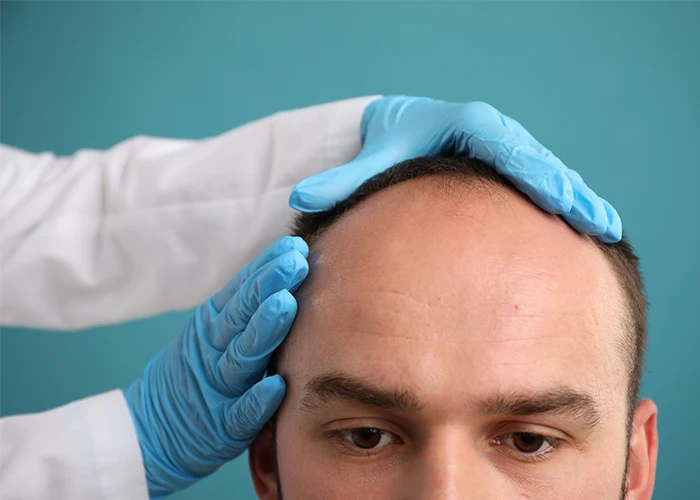
If you have been comparing hair transplant options, you have probably come across offers from clinics overseas: all-inclusive packages at prices that look far below what many U.S. practices charge. It is completely understandable to be tempted. Hair loss is personal, and cost matters. This guide is not here to talk you out of anything. It is here to help you look at the whole picture. Dr. Ambay's advice to every patient is the same: price should not be the deciding factor. Safety, accessibility, and recovery should come first.
The appeal is easy to see. Packages often bundle the procedure, hotel, and transfers into one price, and some clinics advertise heavily. Many talented, qualified surgeons practice in countries around the world, and the International Society of Hair Restoration Surgery notes that excellent, reputable physicians work in every region. A good result is absolutely possible when you travel.
The real question is not whether good care exists elsewhere. It is what happens if your recovery doesn’t go as planned, and how far you would be from the person who performed your surgery.
Every surgery carries some risk, no matter where it is performed. A recent review of FUE hair transplant complications groups them into everyday issues such as pain, swelling, bleeding, and infection, along with donor-area concerns such as scarring or thinning, and recipient-area concerns such as folliculitis, shedding, and results that look unnatural. Serious problems are uncommon when a procedure is done well, but they can happen anywhere in the world.
What changes with travel is who is there to help. A surgeon close to home can examine you the same week a problem appears. A surgeon in another country cannot, and that distance is the main difference between care at home and a hair transplant abroad.
A hair transplant is not finished when you leave the clinic. The scalp heals over days and weeks, and new hairs take months to grow in. If you notice redness, unusual swelling, or something that just doesn’t look right, you will want a prompt answer from someone who can see you.
After surgery overseas, that answer may be harder to get:
The CDC also notes that seeking prompt care when a complication is suspected can lead to earlier diagnosis and treatment.
Most trips go as scheduled. But it helps to picture the other scenario: a complication appears while you are still in another country, and your flight home has to wait. Dr. Ambay encourages patients to think through that situation before they book, because it raises questions that a package price rarely answers:
A strong support structure, meaning a surgeon you can reach, a team that will see you, and people nearby who can help, is part of what you are paying for with any surgery. It is easy to overlook when comparing prices.
The package price is only part of the total. A realistic budget for cosmetic surgery abroad or plastic surgery abroad also includes:
Fixing a hair transplant gone wrong, often called hair transplant repair, is usually more complex than the original procedure. Your supply of donor hair is limited, and a repair has to work with whatever is left. That can mean more than one procedure, more time, and added expense.
Insurance deserves a close look before you travel. The CDC advises checking what your health plan covers outside the United States, and notes that costs for procedures abroad are usually out of pocket. Some people look into medical tourism insurance for this reason. Your insurer can tell you what yours does and doesn’t cover.
Dr. Ambay recommends that every patient, whether they are considering a clinic overseas or one close to home, ask the following questions before committing. They follow the same advice the International Society of Hair Restoration Surgery gives patients, and they put safety, accessibility, and recovery ahead of price.
A confident, qualified surgeon will answer these openly. If the answers are vague, treat that as important information, however attractive the price looks.
Dr. Ambay is a double board-certified plastic surgeon and a retired U.S. Army Colonel who served as Chief of Surgery alongside Army Green Berets and Navy SEALs in Iraq and Afghanistan. He received the President’s Award from the American Society of Plastic Surgeons. His approach to hair transplant surgery is built around personal planning, with a hairline designed for your face and your long-term hair loss pattern.
Just as important, you can see him in person. Healing takes months, and having your surgeon nearby means questions get answered, and concerns get checked face to face, without a flight. If something doesn’t look right, you are in your own home, with your own support system, and close to the person who knows your case. For many patients, that accessibility is a large part of feeling confident throughout recovery. If you are still deciding between approaches, a consultation can also help you understand which of the available hair restoration options fits your stage of hair loss.
Comparing a hair transplant abroad with local care is a fair and important step. A consultation gives you a clear plan, a clear price, and a clear picture of the follow-up you can expect. If you would like to talk through your options, we are glad to help. The best result is when it’s done right from the start. A redo after infection is much more complicated for three reasons:
1. The best hairs are already harvested and lost.
2. The existing hair that does not take creates a scar on the scalp, and new hair follicles taken to fix the issue don’t grow well in scar tissue.
3. Infections usually occur around weeks 2-3, and you are unlikely to still be staying overseas for care that long. Potentially, you can be left with unfixable defects or an active infection.
By trusting Dr. Ambay, you get to work with an experienced partner committed to your entire hair transplant journey.
Dr. Ambay is a double board-certified plastic surgeon who specializes in cosmetic surgery of the face and body. He performs a wide range of aesthetic treatments at his Florida practice.
MEET DR. AMBAY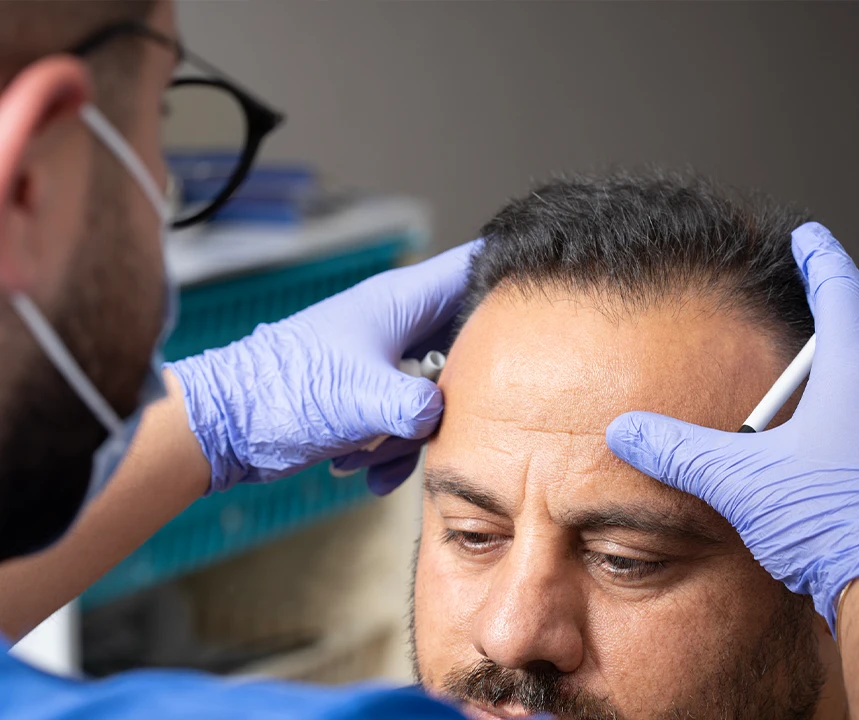
November 5, 2026
If you have been researching hair transplants, you have likely run into two terms again and again: F ...
May 6, 2025
Seeing extra hair on your pillow, in the shower drain, or noticing a receding hairline can be unsett ...

Double Board-certified plastic surgeon

Most importantly a surgeon who truly cares and takes pride in his work

Advanced technology and surgical technique

Highest standard of precision and care

Awarded the President’s Award from the American Society of Plastic Surgeons

Extensive expertise

Dr. Raj Ambay is a well respected and trusted surgeon in Wesley Chapel. His work speaks for itself when you look at his patients’ before and after photos. Call 813-406-4448 and book your appointment to discuss the concerns that you may have.
Ambay Plastic Surgery is conveniently located in Wesley Chapel and frequently serves patients from all over the surrounding Tampa Bay area and beyond.
